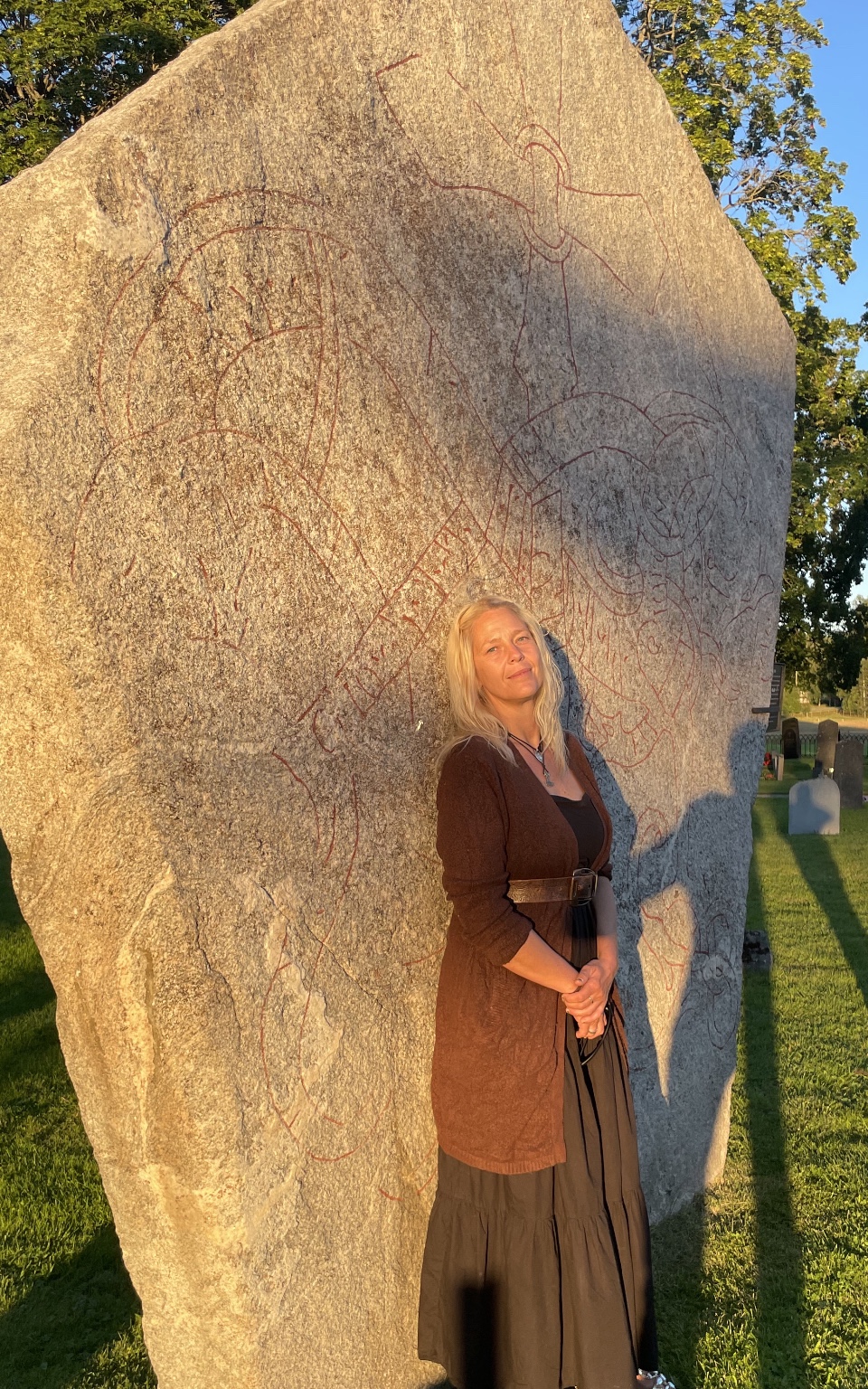
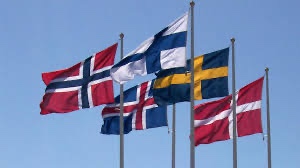
First, a little bit of history.
As far as we know, the Nordic countries began taking shape during the Viking Age and the early Middle Ages.
For several hundred years, rulers of what’s today Sweden, Norway and Denmark fought over the territory in Scandinavia. My homeland, Sweden, have a very old history but Sweden as we know it isn’t particularly old.
Svearike (Swēorice) and svitjod (”the people of Svea”) appear for the first time in the Anglo-Saxon Beowulf poem, and is supposed to have originally been used as a name for a state formation of unknown size centered in Old Uppsala, ruled by Sveones.
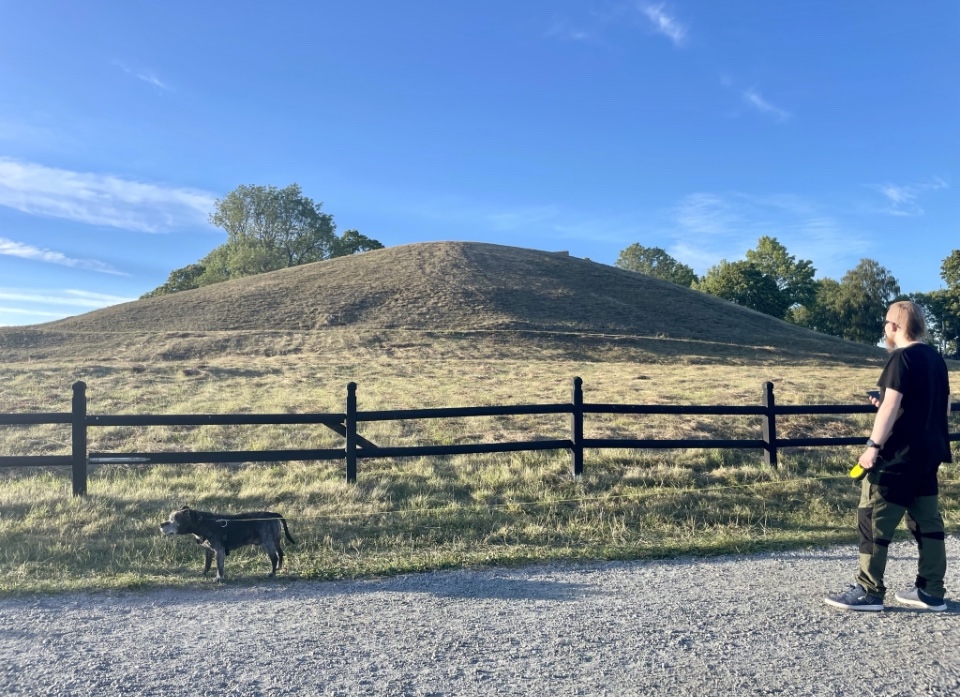
Sveones as a group was probably first mentioned in writing by the Roman historian Tacitus in 98 AD. In the 12th century, Sweden consisted of Sveones, Geats and Gutar. In other words, a fraction of the territory that is Sweden today.
In the 14th century, concerns about the German Hanseatic League grew among Danish, Swedish and Norwegian noblemen and kings. At a meeting in Kalmar, in 1397, grandees for the three countries appointed Queen Margareta of Denmark’s adopted son as king.
Dissatisfaction with the union grew in Sweden, however, and disputes replaced each other. In 1419, the Faxehus fortress, in my ancestral landscape, was administered by Danish bailiffs.
In 1520 Stockholm was captured by the Danes. Those interested in history are recommended to google ”Stockholm’s bloodbath”.
Sweden formally left the union in 1524, with Gustaf Vasa as king, and has since been a self-governing country.
I was born and raised in the southern part of Sweden’s northern half, in Hälsingland – part of Norrland. When the Kingdom of Sweden was formed, Hälsingland was for a long time outside the Swedish king’s dominion.
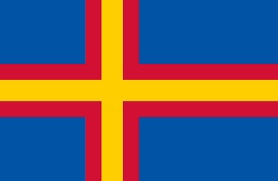
The earliest mention of Hälsingland may be in the 9th century English poem Widsith, which mentions a people living in the north called Hælsings.
Hälsingland was also mentioned by Adam of Bremen, then as Halsingland, in connection with the Ledungen. Adam stated that Hälsingland was a separate country, located between Sweden and Norway.
The Florence List, from 1103, mentions Hälsingland in its Latin form ”Helsingia”.
Hälsingland is also mentioned in letters from Pope Innocent II, Emperor Frederick Barbarossa as a separate country – comparable to Denmark, Norway, Sweden, the Faroe Islands and Greenland.
According to Saxo Grammaticus, Hälsingland was not a part of the Swedish kingdom.
In the Sverresaga, Sverre and his men traveled through Hälsingland. They encountered well-armored Haelsingians who had decided to stop the Norwegians. There were no bloodshed though for they struck a deal with the Norwegians.
Snorre Sturlasson also mentions Hälsingland. In Heimskringla you can read about how Þórir helsingur (Tore Hälsing) who fled manslaughter accusations. and called his new land Hälsingland.
Stenfinn, later Hälsingland’s apostle, tried his hand at missionary work in Hälsingland in the 11th century. However, he was martyred in 1072 by outraged pagan Haelsingians who didn’t at all want to be converted.
The first time Hälsingland appears in ”Swedish” documents is in a letter from Archbishop Peter to the canons in Uppsala, written between 1188 and 1197. The letter states that the archbishop has the right to receive 100 cubits of woven cloth during a visitation in Hälsingland. At this time Christianity was, at least partially, spread in Hälsingland, and the area was a part of the Swedish church province. However, there are no indication that Hälsingland at the time also obeyed the Swedish king. When the Swedish king’s tax collector, in 1317, came to Hälsingland to try to collect taxes he was beaten to death by the Haelsingians, who didn’t consider themselves part of the kingdom of Sweden.
In the centuries that followed, the cooperation between Haelsingians and the Kingdom of Sweden gradually improved but the government continued to have problems with getting the them to see themselves as part of Sweden right up until the reign of Gustav Vasa (1523-1560).
The Haelsingians also fought against the Danes. Fighting continued for several years during the Union period. Among other things, it is told about how the Haelsingians scattered peas on the river Ljusnan so that the Danes slipped, and were then stomped to death by Haelsingians equipped with spiked shoes. On September 8, 1434, the Haelsingians have had enough. They stormed the Danes in Faxehus and burned down the castle.
And now some of my thoughts…
To this day the Haelsingians still has a reputation for being local patriots. A Scanian antiques dealer angrily told me that he had given up trying to buy old objects from Hälsingland as the Haelsingians were prepared to pay a lot for things they didn’t really want, just to make sure that objects didn’t leave the region.
Many of today’s Haelsingians probably have a rather poor grasp of how difficult their ancestors actually were, but undoubtedly the pride and stubbornness of their Haelsingian ancestors still remain in the public consciousness. I’d say it’s in our genes.
My father taught me, from an early age, that I come from a long line of proud self-owning Haelsingian farmers, and to be honest I can really feel that pride in every inch of my body.
”I’m a Haelsingian, I don’t align myself in the ranks just because the supremacy wants me to.”

I grew up with the tales of my ancestors and the marks they left in the landscape. They are a part of me. I’m a part of them.
For the past 22 years I have lived in Southern Sweden; eighteen years in Skåne and four in Halland. I live in an area with thousands of ancient finds. There’s several grave mounds in the area, one just outside my house. These are ancient grounds.
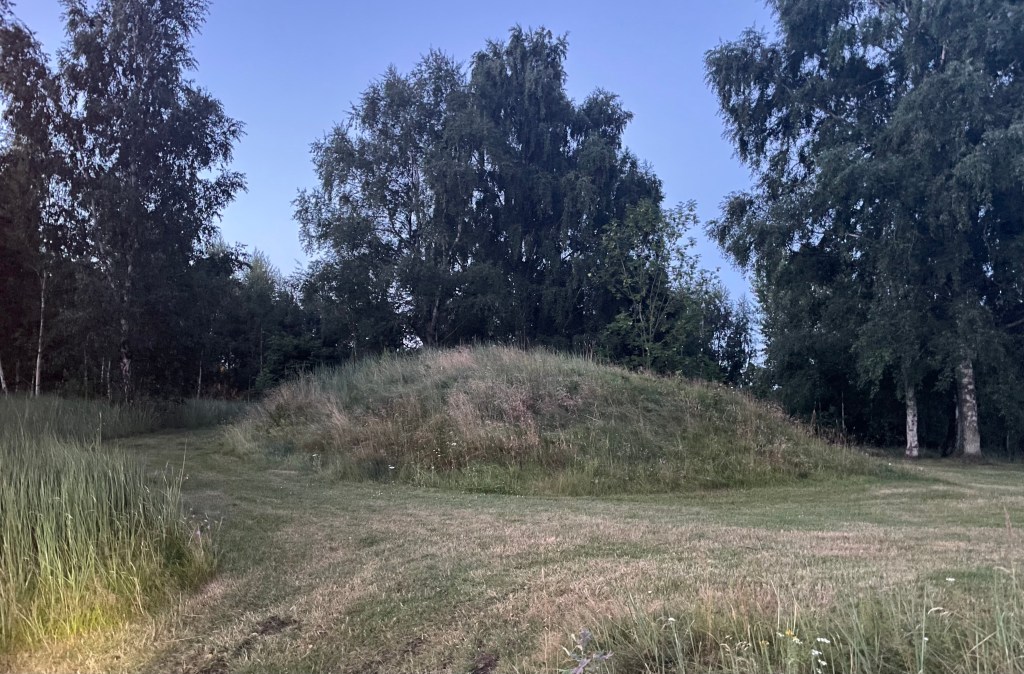
The merchant Ottar, who in the 870s traveled between Skiringssal and Hedeby, told that Halland was a part of the Kingdom of Denmark.
The majority of time since the Nordic kingdoms began to take shape, neither Skane nor Halland have in fact been a part of Sweden. Apart from a few short periods the people living here were Danes.
Not until the Peace of Brömsebro in 1645 did Halland become a Swedish province, and with the peace of Roskilde in 1658, Halland became permanently Swedish – only 364 years ago.
In other words, neither the region where I grew up nor the region I live in have been a part of Sweden that long.
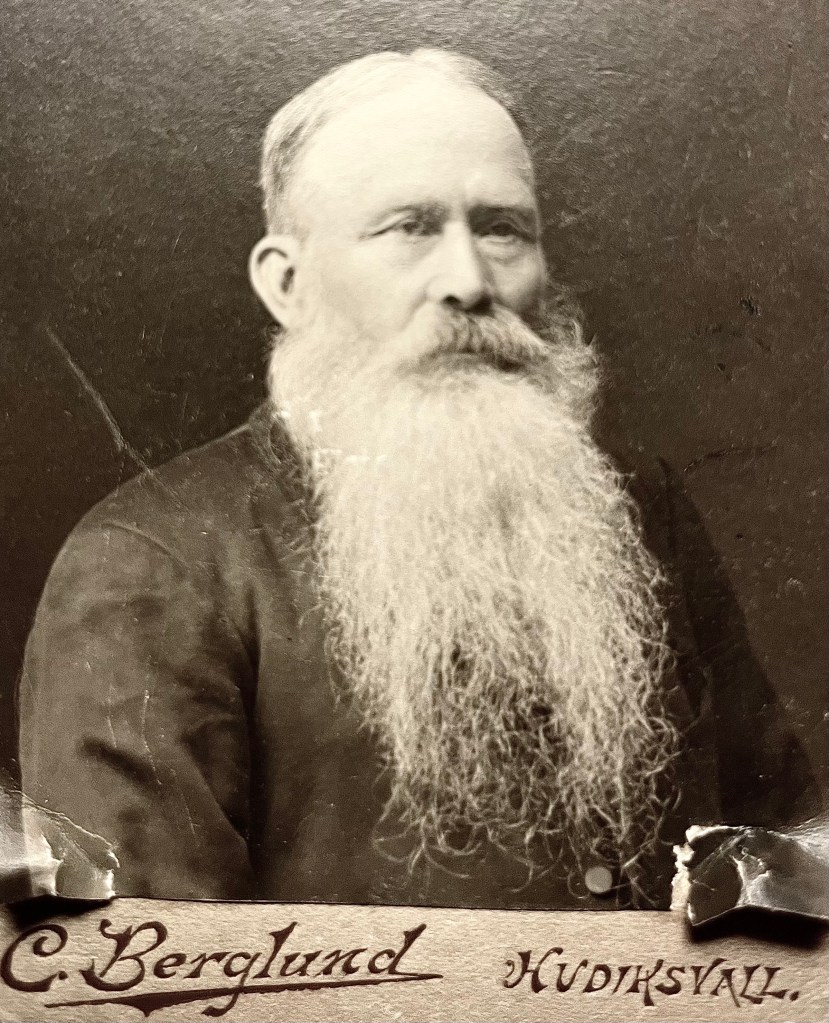
In my family tree there are verified ancestors born as early as the 16th century. They were thus born before Halland belonged to Sweden, and shortly after Hälsingland actually became part of Sweden. That realization feels unreal somehow. But it also provides perspective;
Sweden, this neutral country that somehow have become synonymous with peacetime.
Sweden, who has become known for its fantastic social insurance system and strong social justice.
Sweden, where peace and security is sort of taken for granted.
Sweden haven’t been at war for over 200 years. It is 208 years since Sweden made peace with Norway in Moss.
200 years is a lot, it’s considered.
200 years.
But my grandfather was born 1902, 120 years ago. Is 200 years really that long?
It frightens me sometimes that so many don’t seem to understand that our existence is not self-evident, that our existence may look very different in just a few years. That it probably will.
It seems to me that the governments of the world, in honestly not very discrete ways, is trying to shrink the citizens’ freedom of action and rights and that far to many choose to not see this. Why is that? Why do so many take their way of life for granted? Do they think that chaos can’t find them in their well furnished houses?
We are no different from those who came before us. We’re the same species as humans living in war-torn countries. We’re not better, we don’t know better than them. We’re not immune from bad times. We’ve just been lucky that the fortresses that our ancestors built have been intact this long. But just because we’ve lived in peace our whole lifes doesn’t mean this land will never be a battlefield again.
Just as we read about our ancestors, people of the future will read about us. They will read about our everyday life and mumble in amazement ”imagine what it was like to live back then”.
I don’t live in fear of the uncertain future, for the future has never been anything but uncertain. It can never be anything else.
I live in the knowledge, though, that our time here is just one second of human history. It is our responsibility to do the best we can with the thread of life the Norns have spun for us. My responsibility and yours.
I for one know that my Haelsingian genes will not stop fighting for the freedom and wellbeing of my loved ones for as long as I live and breathe. And all though I’m baffled over the amount of people who choose to live with blindfolds I believe that the ones that count will wake up before it’s too late. They to have warriors blood in their genes after all.
And if we stand together, the people of the Nordic countries as the brothers and sisters we really are, we are strong.
In our Norse mythology the first king of Sweden is said to have been Odin. I’m sure he’ll stand by our side!
Hell.
 Nanna from the north